Santander UK is a major retail bank operating under strict UK regulatory and legal obligations. I worked within the Financial Crime function, leading UX design for the PKYC (Perpetual Know Your Customer) programme, a business-critical initiative designed to ensure ongoing customer data accuracy and regulatory compliance.
Company
Santander
Timeline
2023
—
2025
Role
Lead Product Designer
Project overview
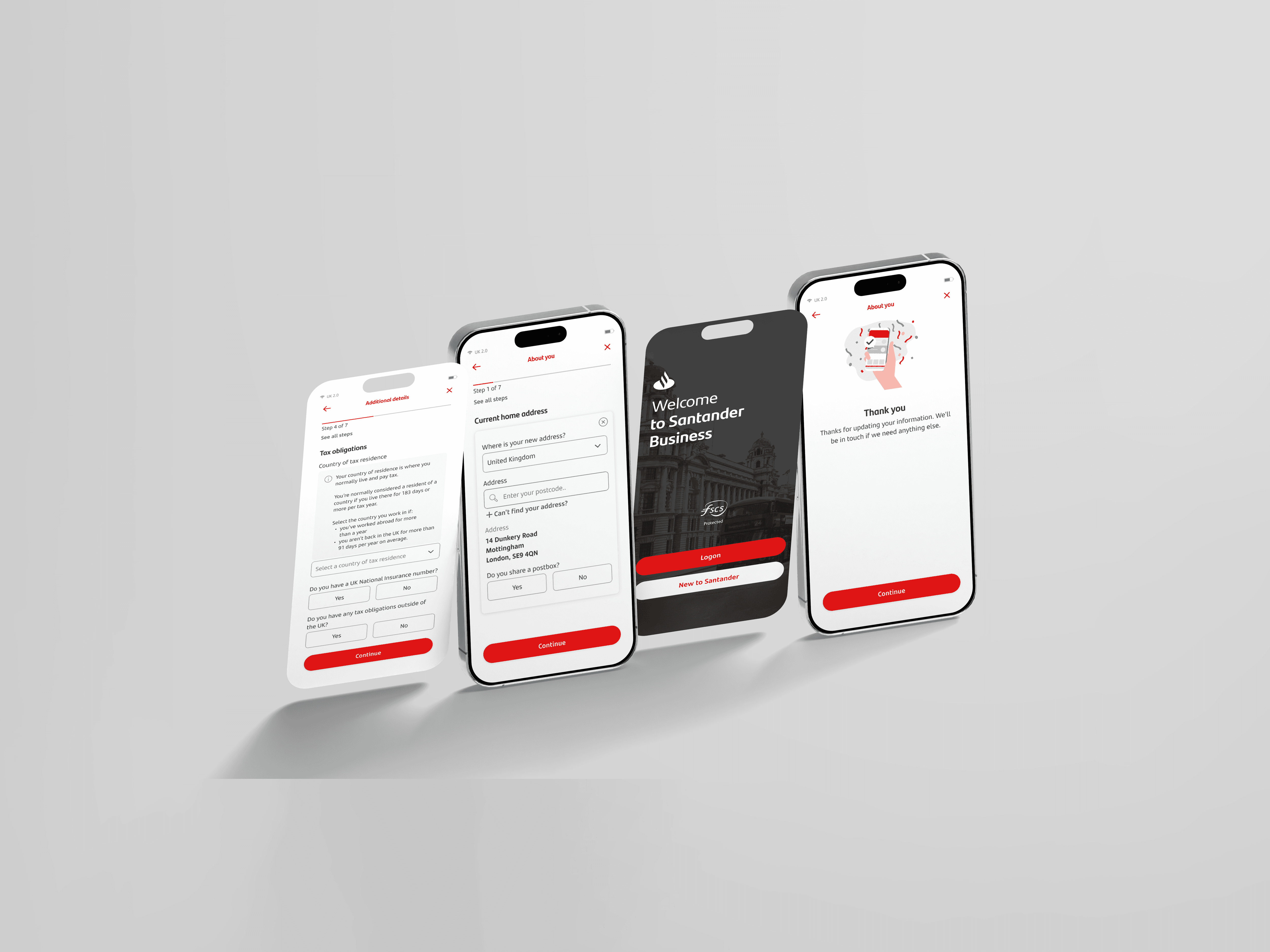
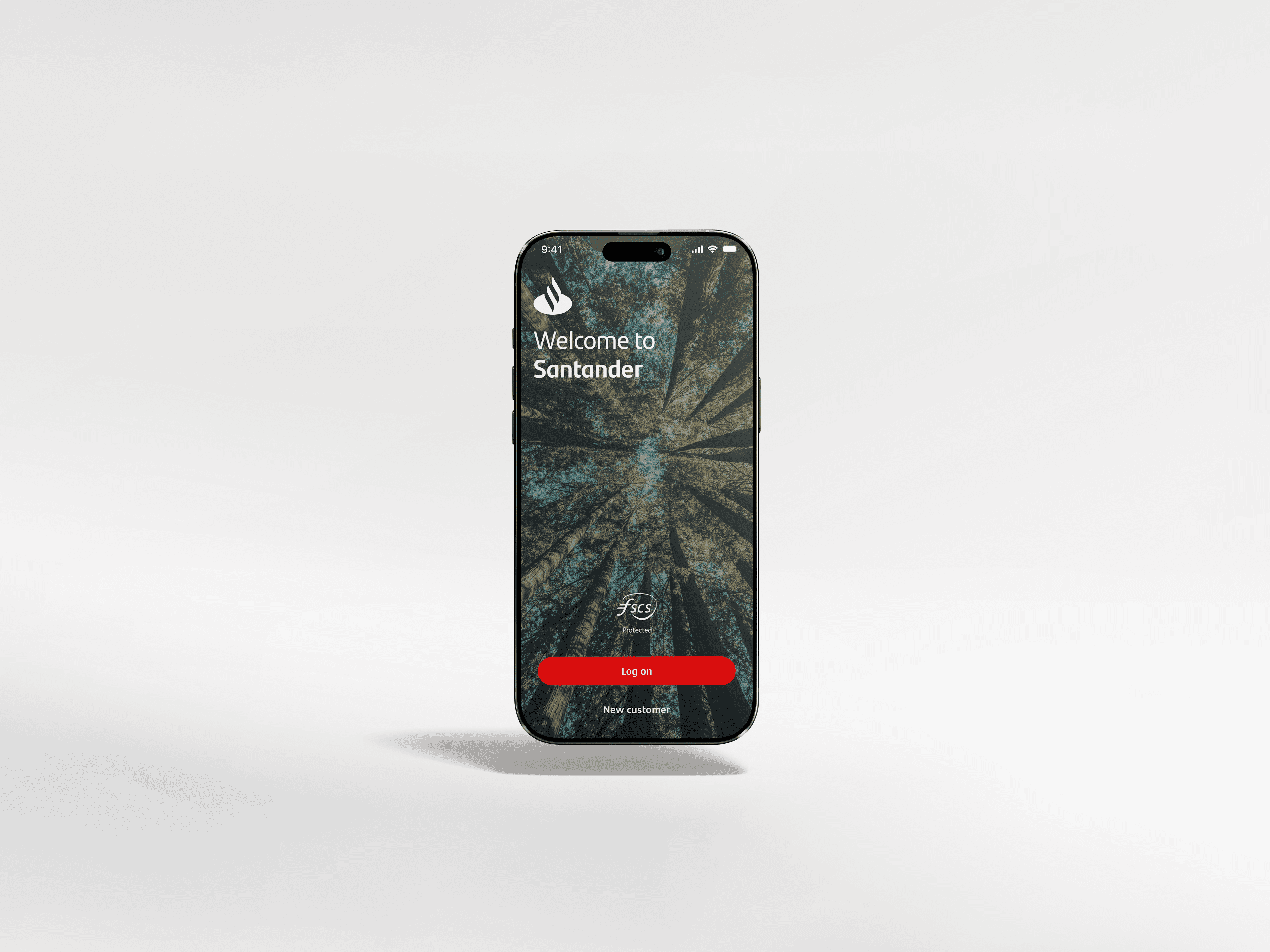
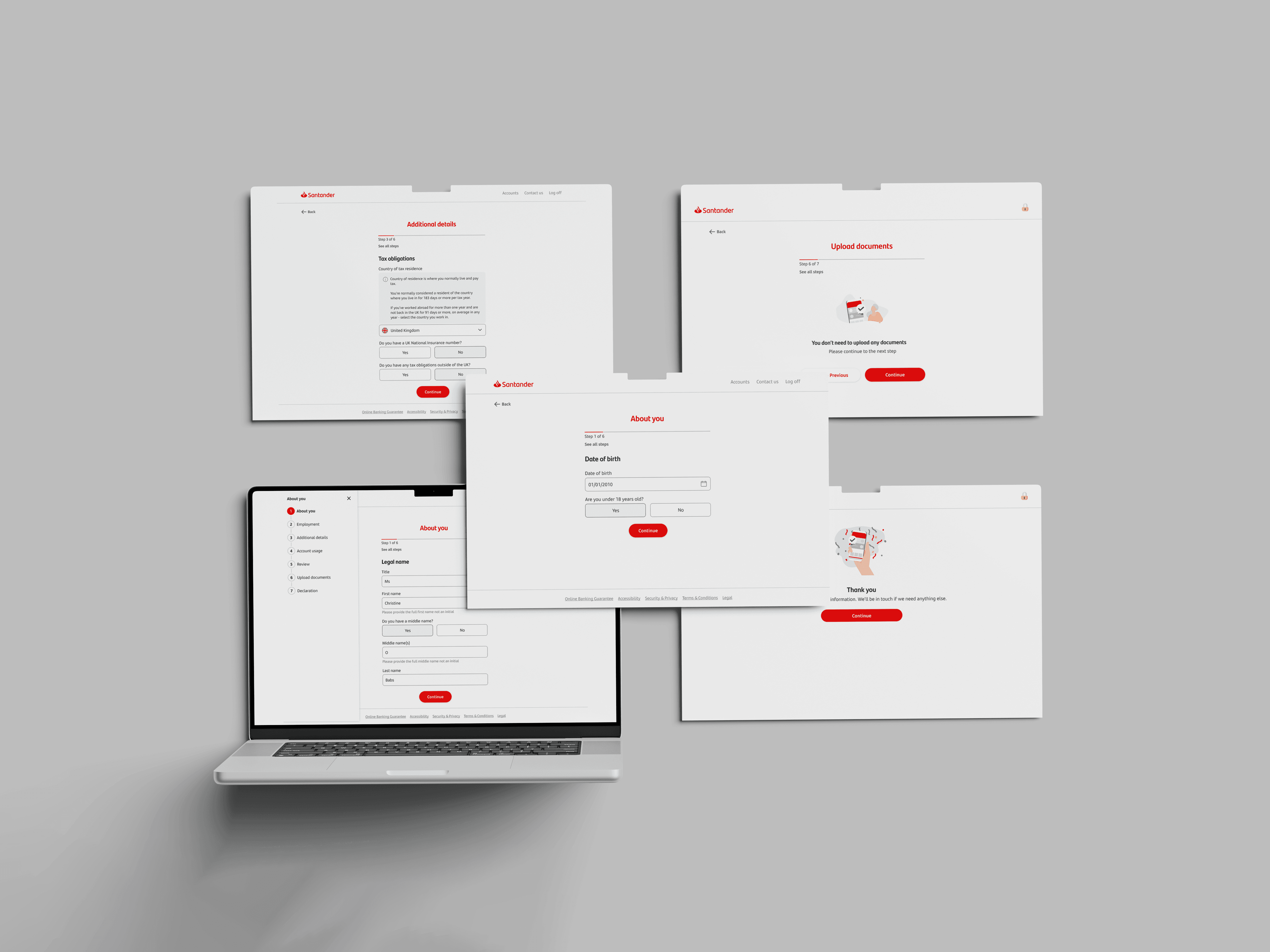
The PKYC programme was designed to help customers periodically confirm and update their personal details, so Santander could meet UK legal and regulatory requirements around financial crime prevention and identity verification. As Lead UX Designer, I owned the end-to-end experience across mobile and desktop, working in an agile team from early discovery through to release. The solution initially used a physical letter to give customers context before directing them to a digital flow. As the programme matured, we moved to direct in-app notifications, which reduced friction and made things more accessible. My role went beyond interface design. I worked on experience strategy, stakeholder alignment, and delivery leadership, making sure compliance requirements turned into clear, trustworthy customer experiences.
Challenges
Redesigning the digital onboarding and business banking interfaces for a global institution like Santander presented a unique set of multi-layered challenges:
I had to translate complicated fraud-prevention protocols and legal requirements into something that felt clear and reassuring rather than intimidating. The goal was keeping security tight without creating unnecessary friction that would make users give up during onboarding.
With millions of users, I had to make sure the design worked for tech-savvy business owners and people with lower digital confidence alike. This meant working closely with the Digital Accessibility Centre (DAC) to ensure every flow met compliance standards while staying intuitive for a diverse audience.
I navigated competing priorities of compliance, usability, and tight delivery timelines. Working in Agile, I had to advocate for user-centred design even under pressure, making sure we didn't compromise on accessibility or brand consistency.
Maintaining a unified design system across web and mobile platforms was essential for building trust and making it easier for users moving between different banking services.

Results
I delivered a PKYC experience that worked across mobile and desktop, balancing bank-level security with a modern, user-friendly approach. The project helped Santander move from physical mail to in-app engagement, which improved customer access while meeting UK regulatory requirements. It also established a solid UX foundation for future due diligence programmes and led to a measurable increase in online interaction and user retention across the onboarding flow.
Latest projects

Santander UK is a major retail bank operating under strict UK regulatory and legal obligations. I worked within the Financial Crime function, leading UX design for the PKYC (Perpetual Know Your Customer) programme, a business-critical initiative designed to ensure ongoing customer data accuracy and regulatory compliance.
Company
Santander
Timeline
2023
—
2025
Role
Lead Product Designer
Project overview
The PKYC programme was designed to help customers periodically confirm and update their personal details, so Santander could meet UK legal and regulatory requirements around financial crime prevention and identity verification. As Lead UX Designer, I owned the end-to-end experience across mobile and desktop, working in an agile team from early discovery through to release. The solution initially used a physical letter to give customers context before directing them to a digital flow. As the programme matured, we moved to direct in-app notifications, which reduced friction and made things more accessible. My role went beyond interface design. I worked on experience strategy, stakeholder alignment, and delivery leadership, making sure compliance requirements turned into clear, trustworthy customer experiences.
Challenges
Redesigning the digital onboarding and business banking interfaces for a global institution like Santander presented a unique set of multi-layered challenges:
I had to translate complicated fraud-prevention protocols and legal requirements into something that felt clear and reassuring rather than intimidating. The goal was keeping security tight without creating unnecessary friction that would make users give up during onboarding.
With millions of users, I had to make sure the design worked for tech-savvy business owners and people with lower digital confidence alike. This meant working closely with the Digital Accessibility Centre (DAC) to ensure every flow met compliance standards while staying intuitive for a diverse audience.
I navigated competing priorities of compliance, usability, and tight delivery timelines. Working in Agile, I had to advocate for user-centred design even under pressure, making sure we didn't compromise on accessibility or brand consistency.
Maintaining a unified design system across web and mobile platforms was essential for building trust and making it easier for users moving between different banking services.
Results
I delivered a PKYC experience that worked across mobile and desktop, balancing bank-level security with a modern, user-friendly approach. The project helped Santander move from physical mail to in-app engagement, which improved customer access while meeting UK regulatory requirements. It also established a solid UX foundation for future due diligence programmes and led to a measurable increase in online interaction and user retention across the onboarding flow.